







Preparing Your Zoho, ERP, or Custom Software for the Mandate
As the UAE Ministry of Finance (MoF) and the Federal Tax Authority (FTA) roll out the mandatory national eInvoicing System, businesses across Dubai and the Emirates are entering a new era of digital compliance. Under the UAE’s Decentralized Continuous Transaction Control and Exchange (DCTCE) model, issuing PDF invoices via email or storing scanned paper receipts will no longer meet legal requirements.
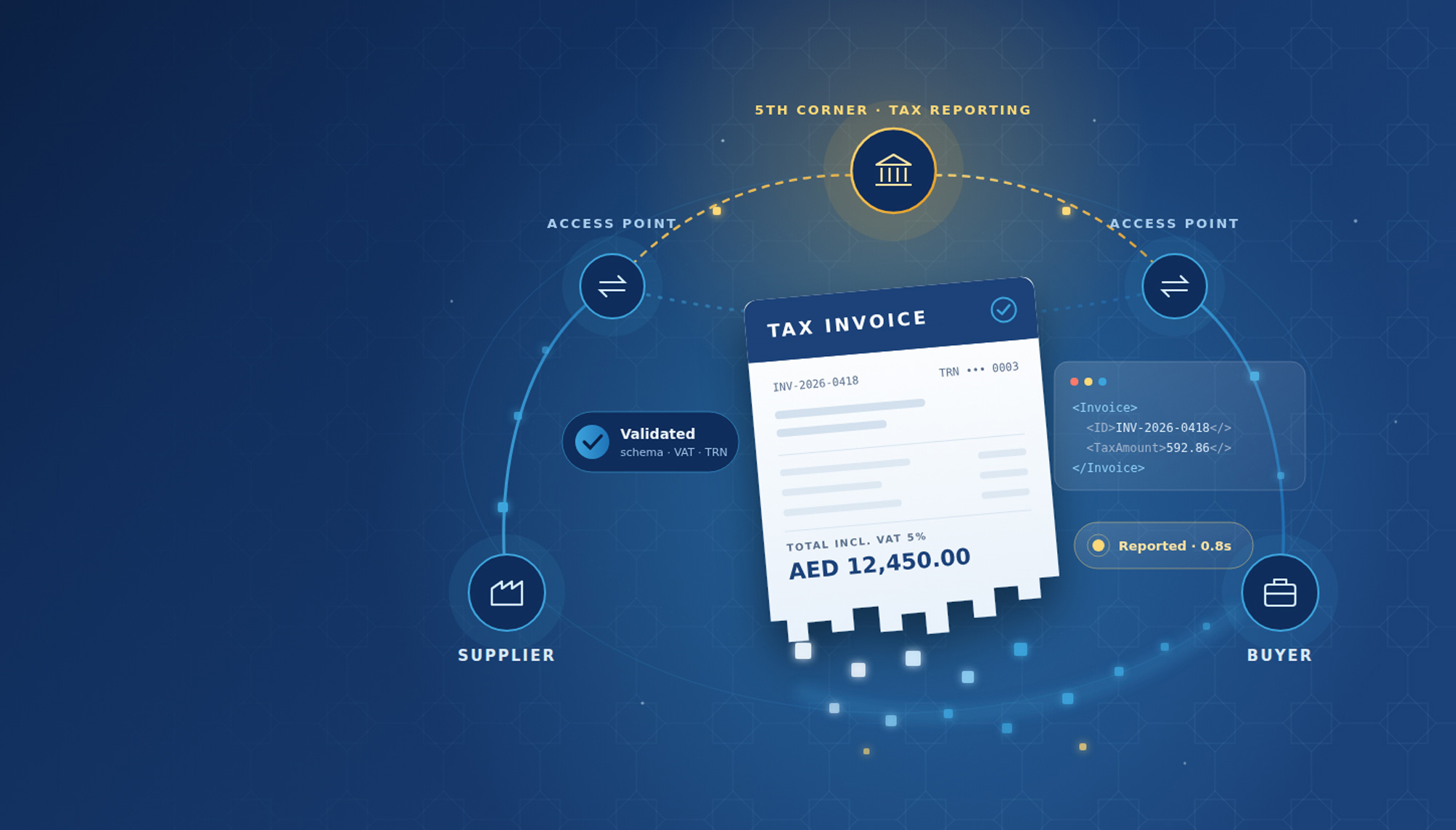
Instead, every commercial entity in the UAE—whether using Zoho Books, enterprise ERPs (like SAP, Oracle, or Dynamics, QuickBooks, Noqood, Wafeq), or custom-built cloud applications—must transmit structured, encrypted electronic invoices through certified Accredited Service Providers (ASPs) over the PEPPOL (Pan-European Public Procurement Online) Network.
This guide breaks down how the UAE eInvoicing framework works, the technical PINT-AE XML requirements, and the exact step-by-step migration checklist your organization must follow to stay fully compliant.
The UAE eInvoicing Model: 5-Corner PEPPOL Exchange
The UAE system relies on the PEPPOL 5-Corner Architecture, replacing manual invoice sharing with automated machine-to-machine exchange:
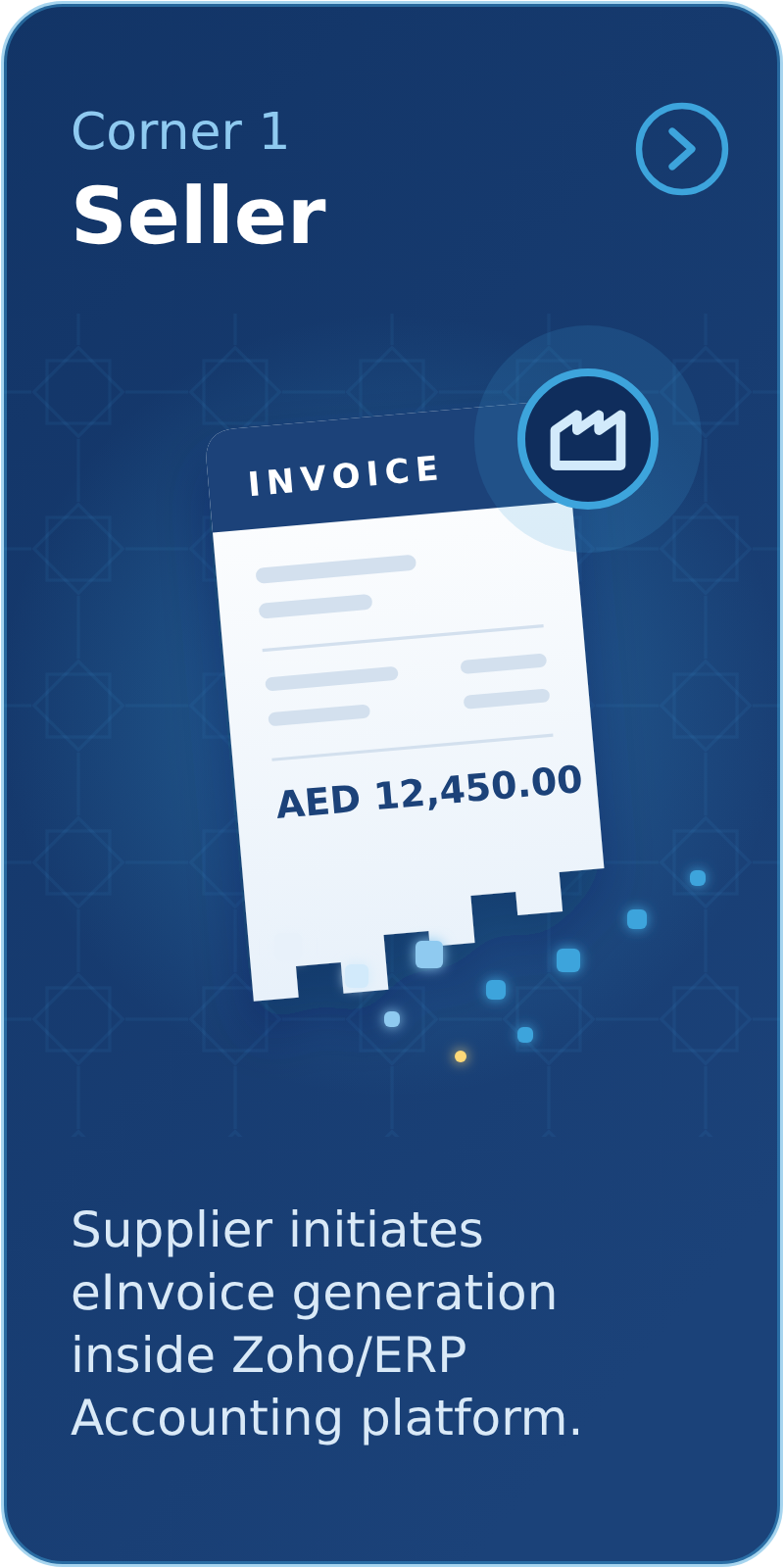
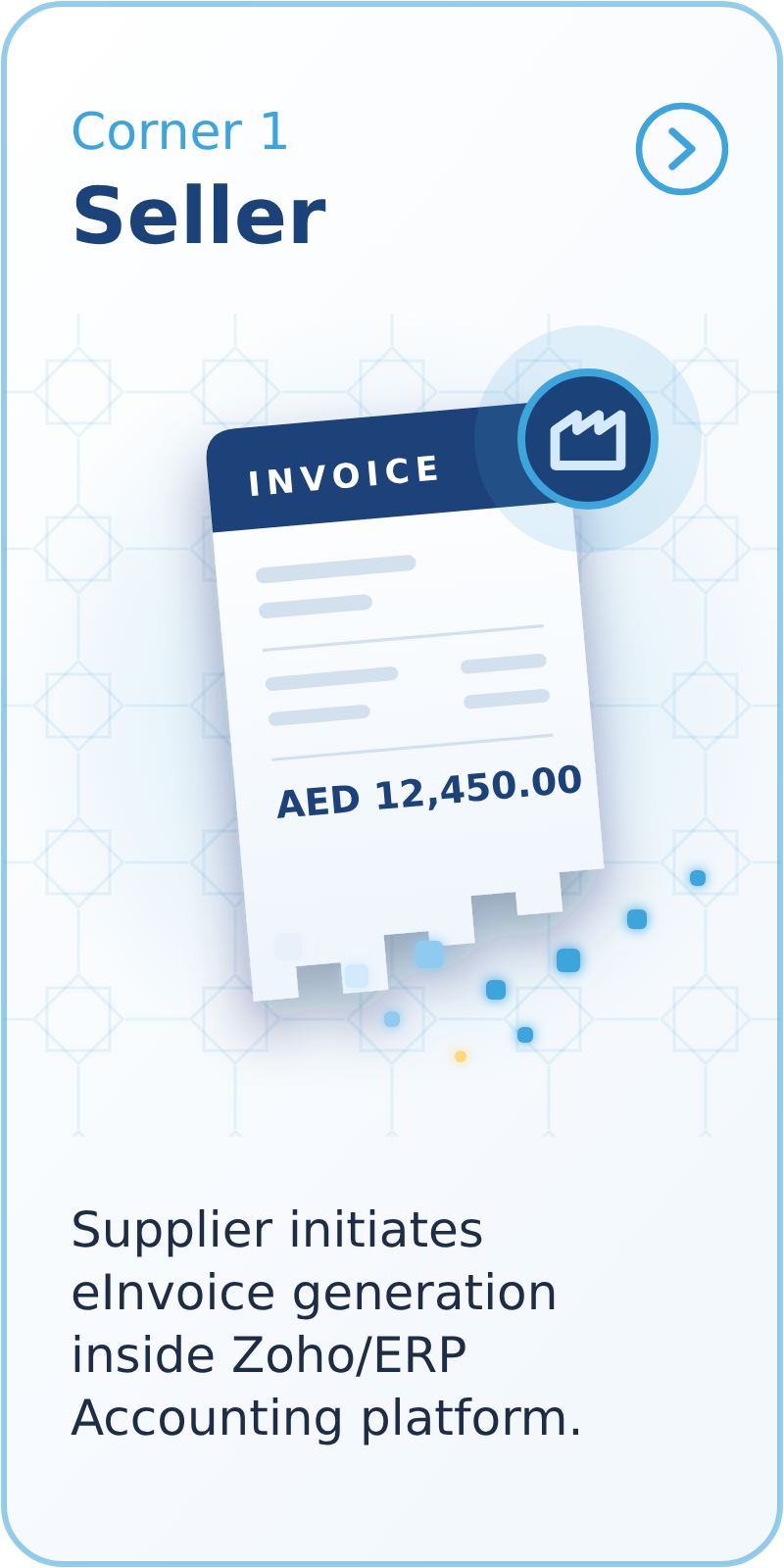
- Corner 1 (Seller): The seller generates the invoice inside their accounting or ERP system.
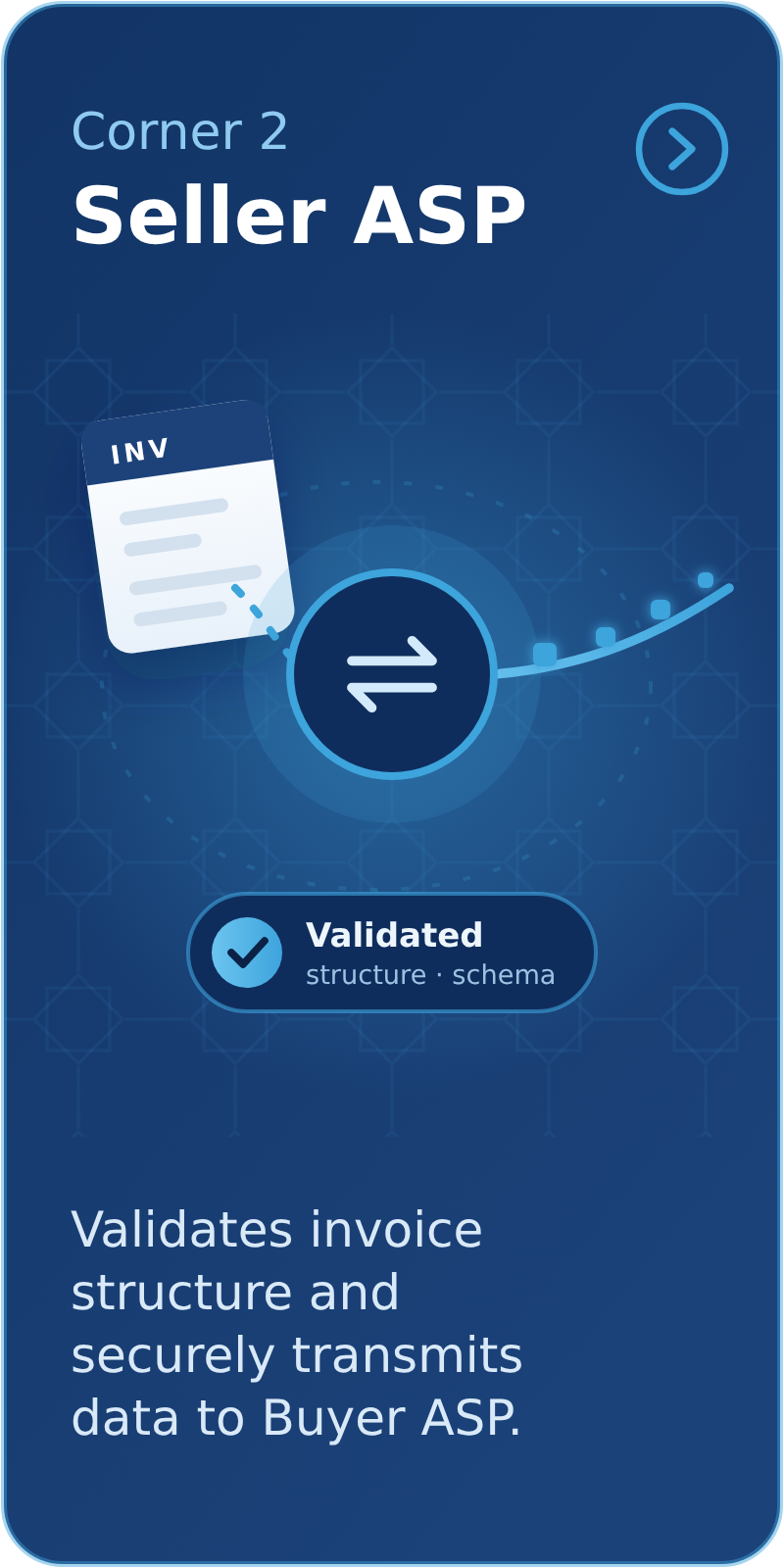
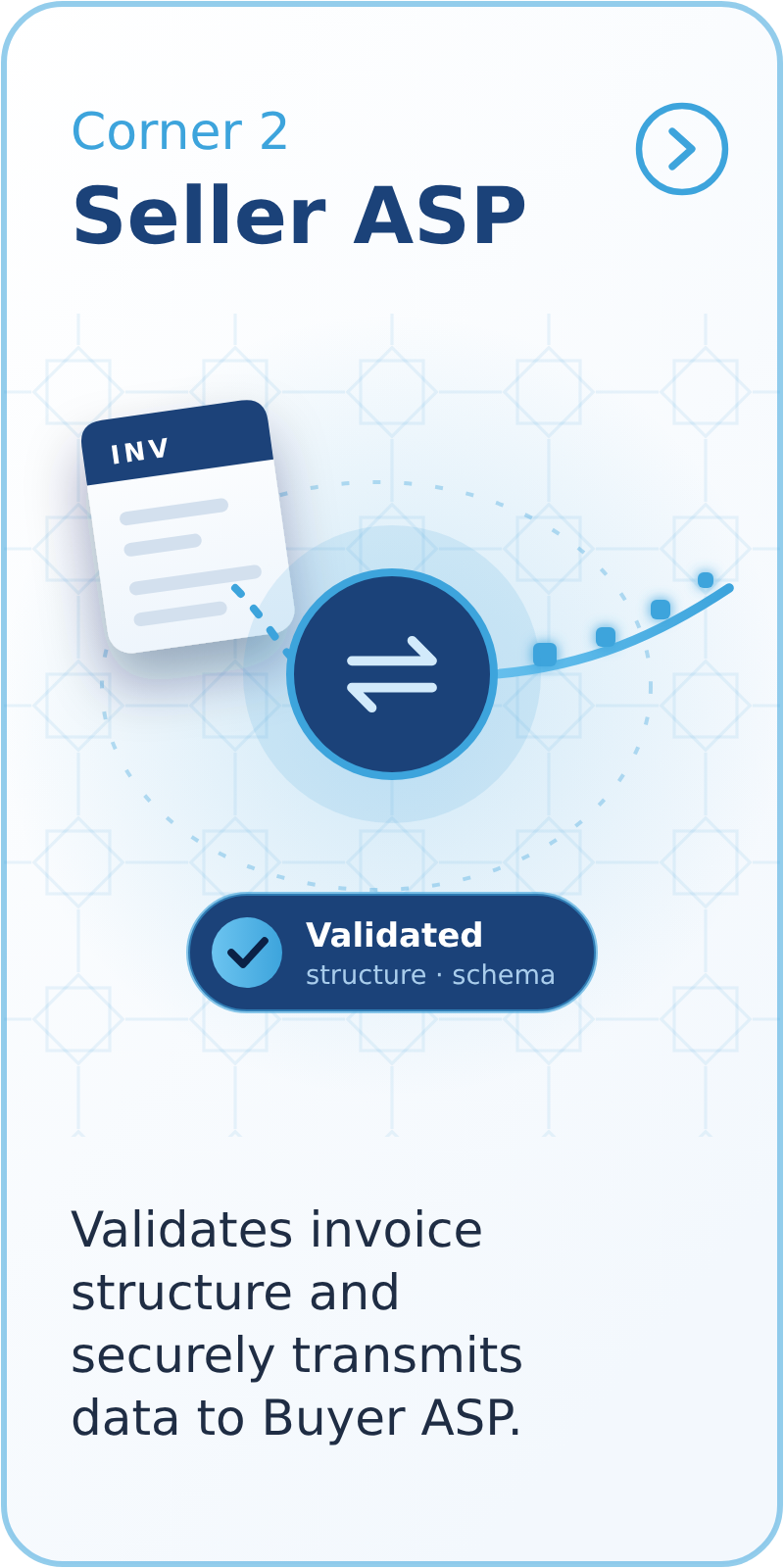
- Corner 2 (Seller ASP): The supplier’s Accredited Service Provider (ASP) validates the raw transaction data, structures it into PINT-AE XML format, signs it, and securely routes it over PEPPOL.
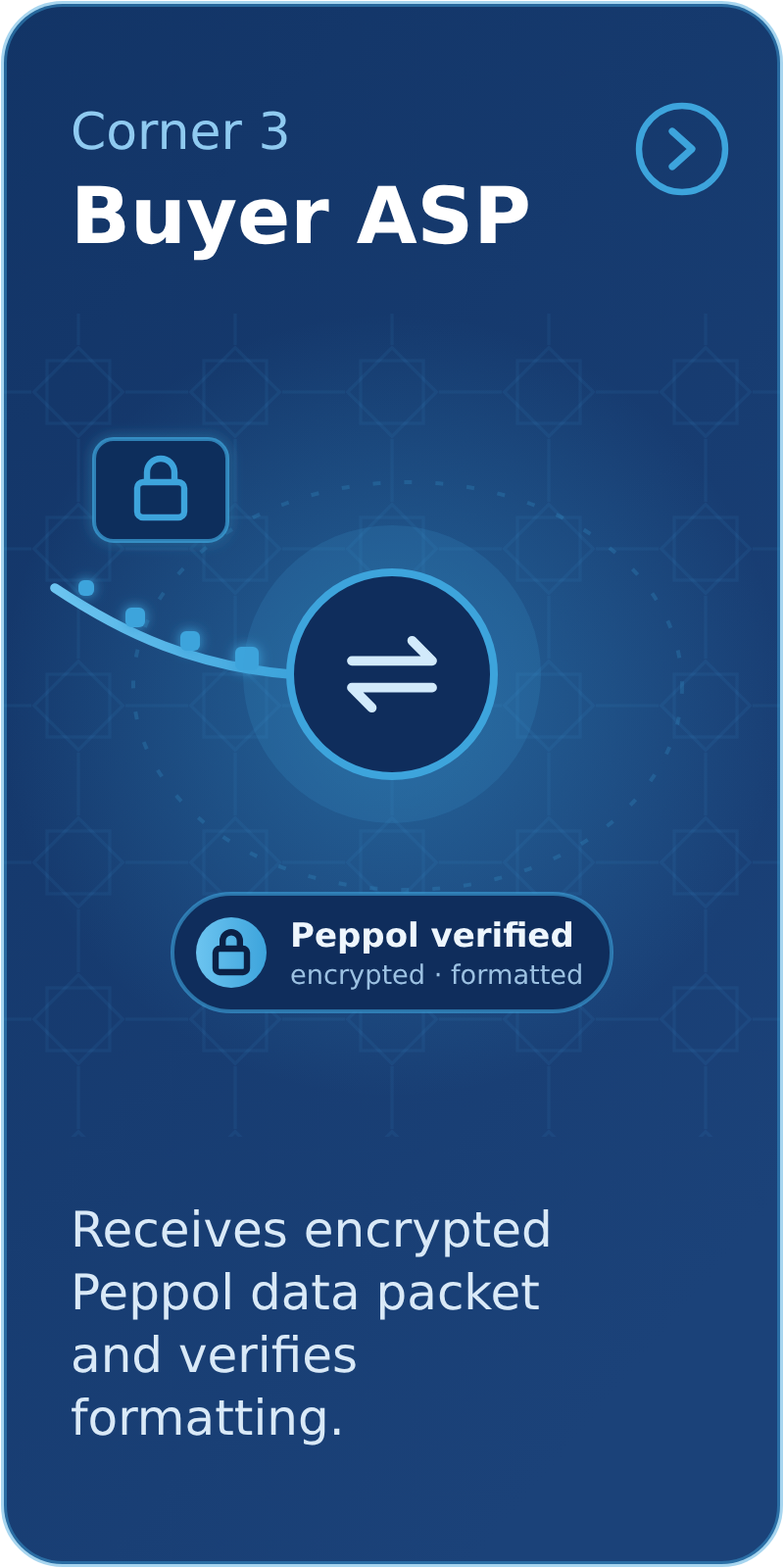
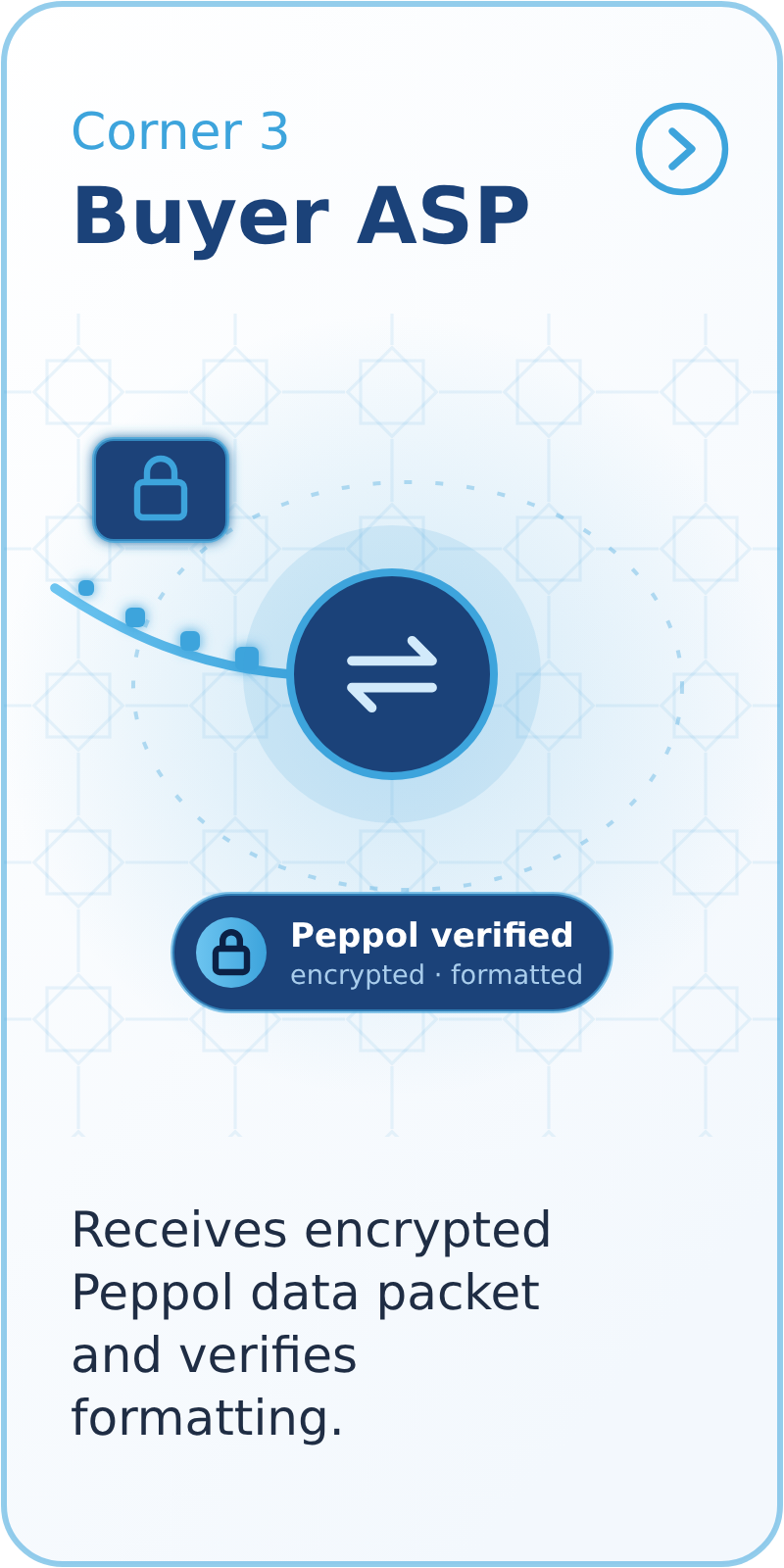
- Corner 3 (Buyer ASP): The buyer’s ASP receives the encrypted payload, verifies formatting, and routes it to the buyer.
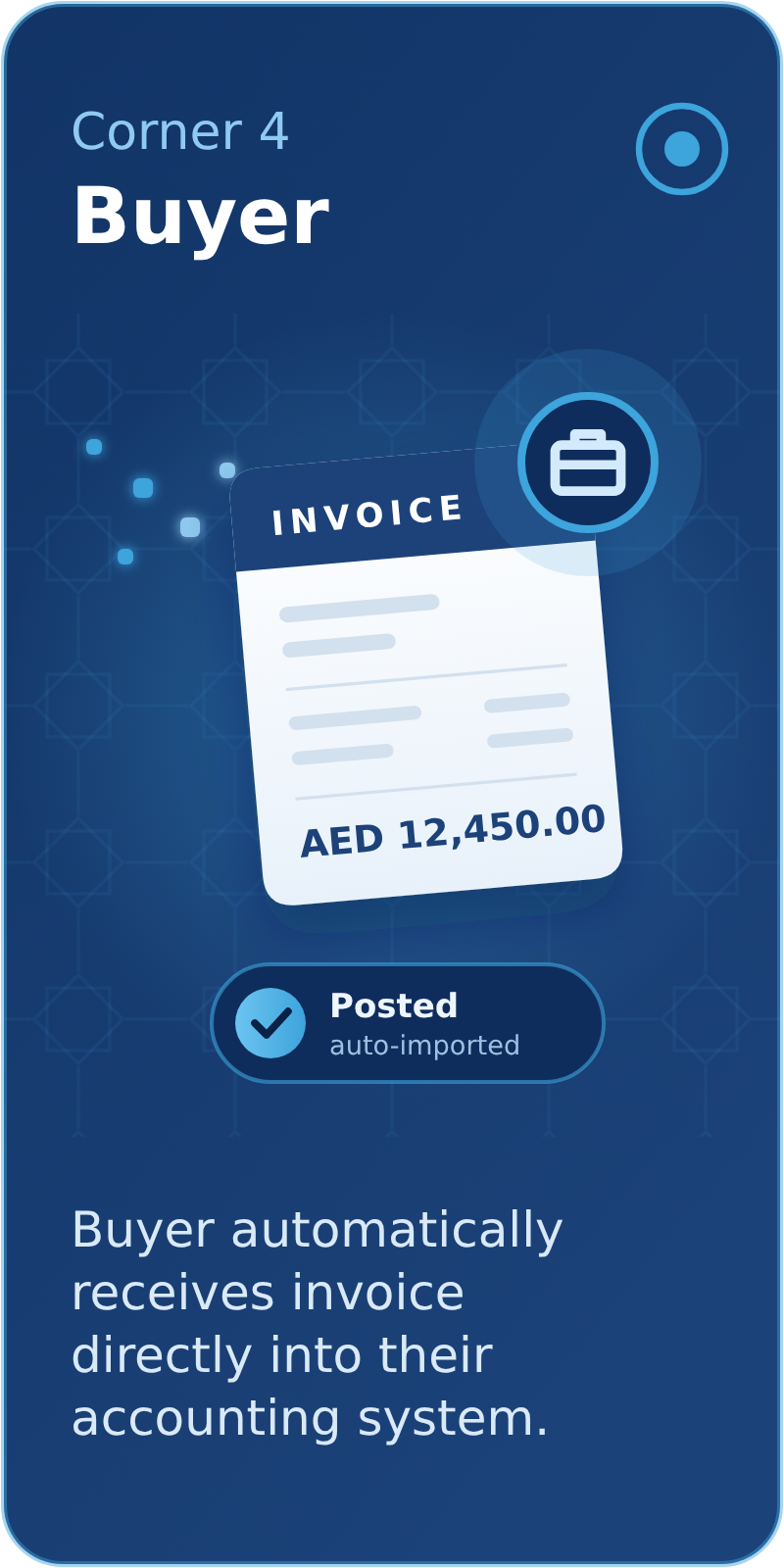
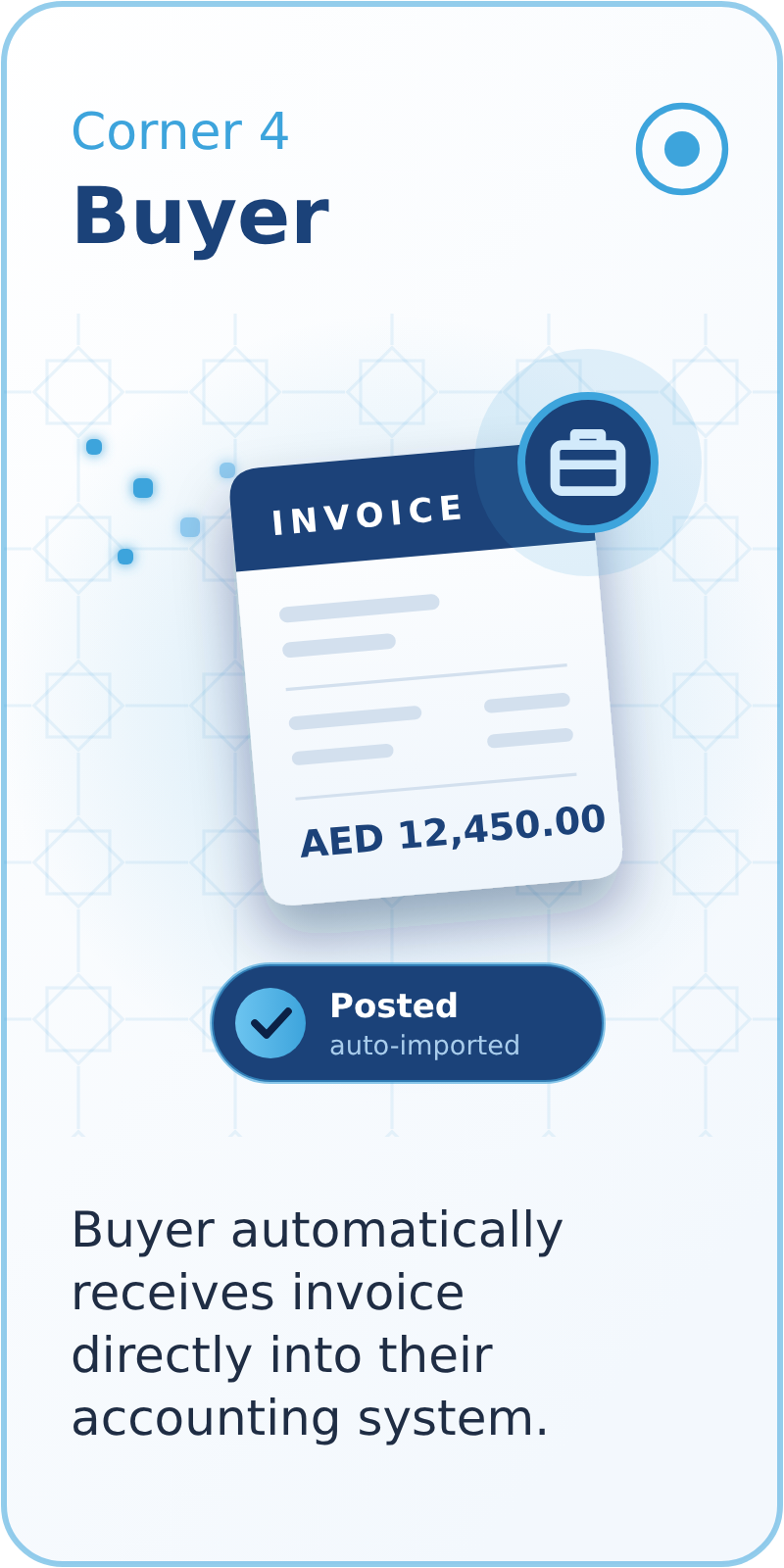
- Corner 4 (Buyer): The invoice is automatically ingested directly into the buyer’s accounting software for AP matching and payment approval.
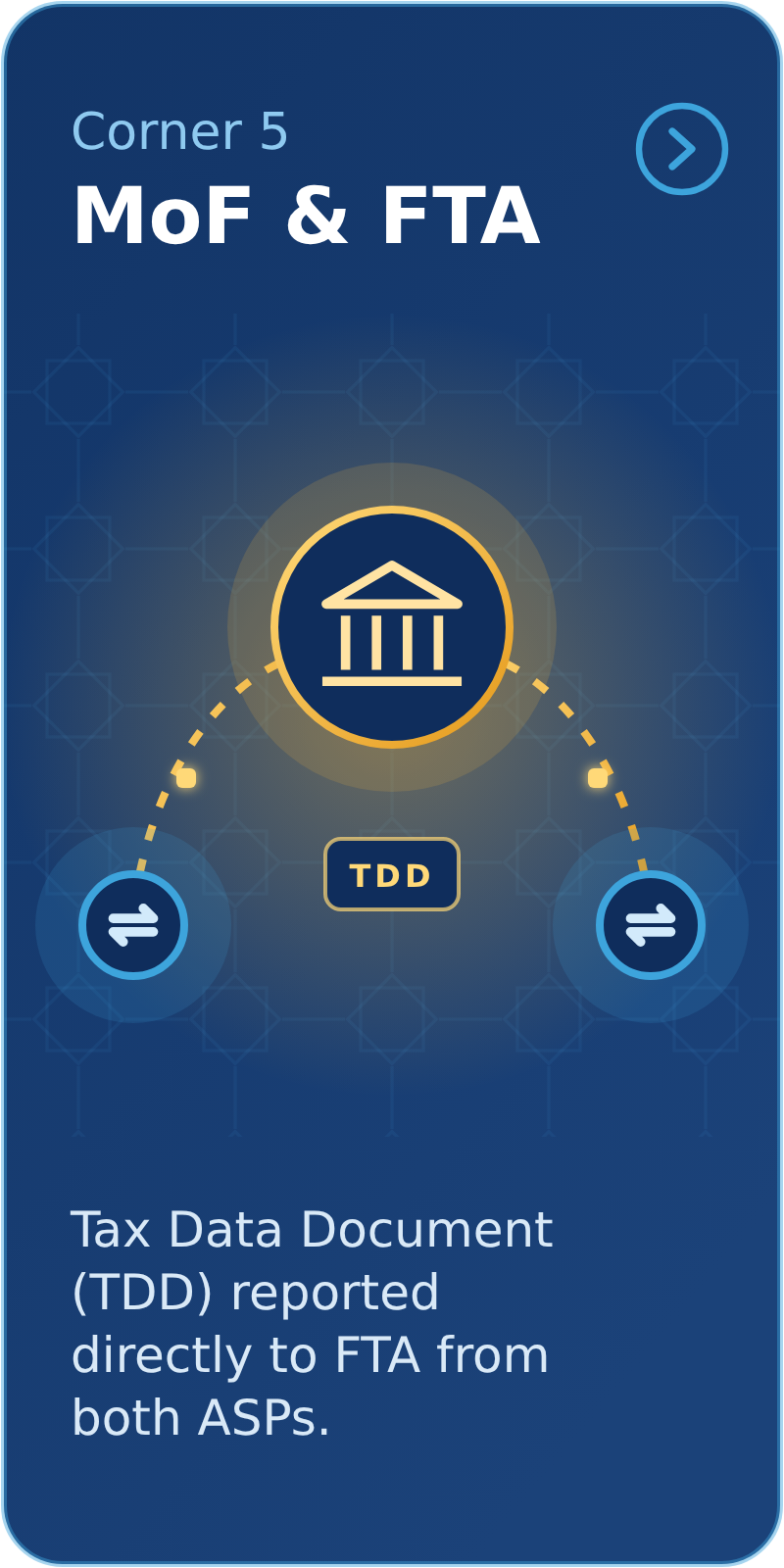
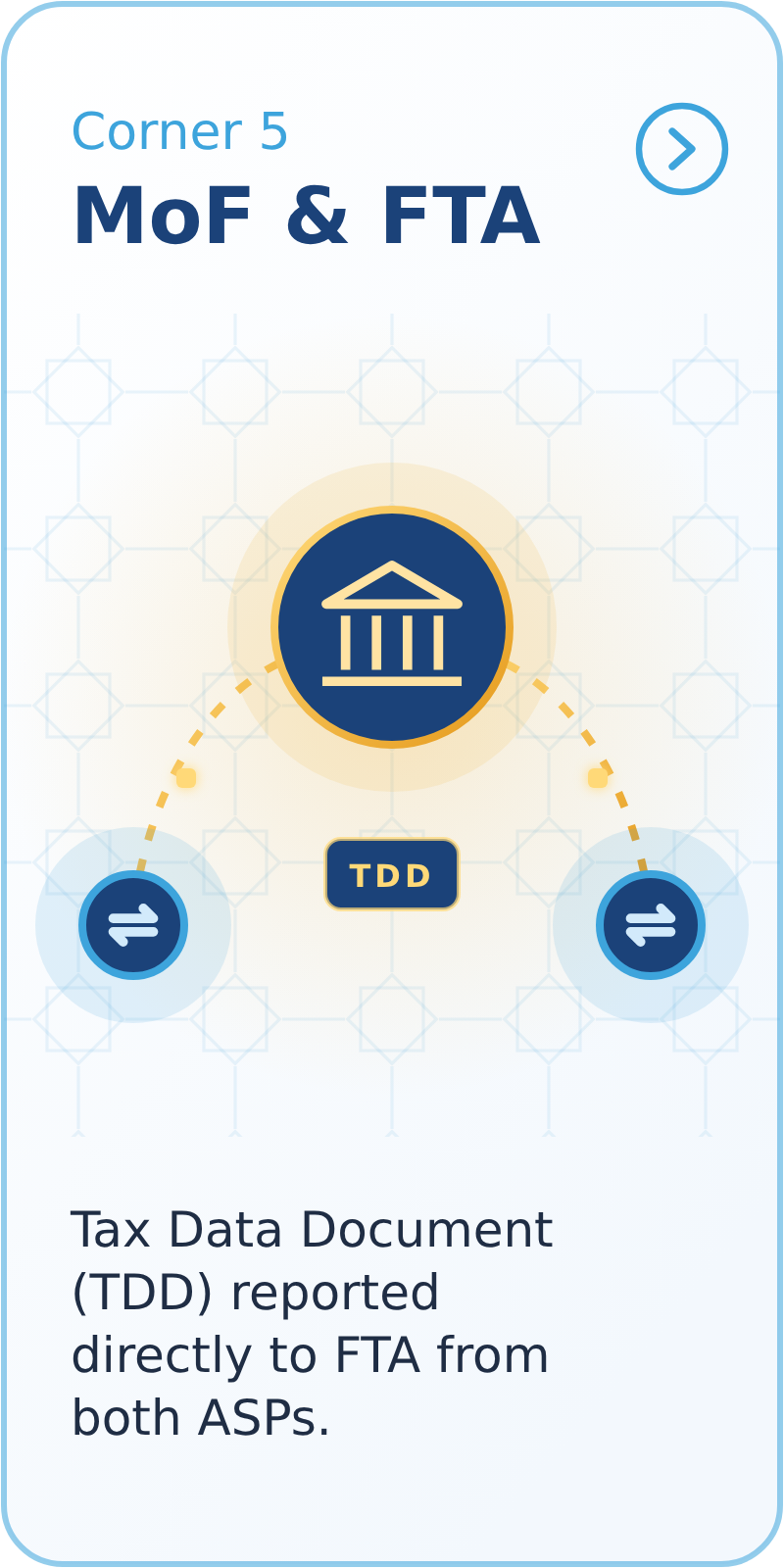
- Corner 5 (MoF & FTA): Simultaneously, both ASPs transmit a Tax Data Document (TDD) directly to the central FTA portal for real-time tax clearance.
Implementation Deadlines & Phased Rollout
The Ministry of Finance has structured implementation into strict phased deadlines based on annual revenue thresholds:
| Phase | Target Group | ASP Appointment Deadline | Mandatory Go-Live Date |
|---|---|---|---|
| Phase 1 | Businesses with Annual Revenue ≥ AED 50,000,000 | 30 October 2026 | 1 January 2027 |
| Phase 2 | Businesses with Annual Revenue < AED 50,000,000 | 31 March 2027 | 1 July 2027 |
| Phase 3 | All UAE Government Entities | 31 March 2027 | 1 October 2027 |
Note on Non-VAT Registered Entities: eInvoicing applies to B2B and B2G business transactions regardless of VAT registration status. Non-VAT registered companies must still register on the FTA EmaraTax portal solely to obtain a 10-digit Tax Identification Number (TIN) for eInvoicing onboarding.
Deep-Dive into PINT-AE XML Standards & Mandatory Fields
The UAE has adopted the PINT-AE (PEPPOL International Invoice specification adapted for the UAE). All invoices must be formatted as structured XML (Extensible Markup Language) packets. Traditional visual formats like QR codes or barcodes are not allowed on standard UAE e-invoices.
The FTA mandates six structured field categories, with precise specifications based on the invoice type:
- Tax Invoices (51 Mandatory Fields): Requires full VAT reporting, line-level AED breakdowns, and seller/buyer TRNs.
- Commercial Invoices (49 Mandatory Fields): Used for out-of-scope or commercial transactions where VAT fields are omitted.
Document Type Codes (cbc:InvoiceTypeCode / cbc:CreditNoteTypeCode)
Your software must tag every transmission with its exact document code:
- 380 / 381: Standard Tax Invoice / Tax Credit Note
- 389 / 261: Self-Billing Invoice / Self-Billing Credit Note
- 480 / 081: Commercial Invoice Out of Scope / Commercial Credit Note
Tax Category Codes
Every line item must carry a single-letter PINT-AE tax code:
- S: Standard Rate VAT (5%)
- Z: Zero-Rated Supplies
- E: Exempt Supplies
- O: Exempt Supplies
- AE: Reverse Charge Mechanism
Out of Scope Transactions (Exemptions) & Retention Rules
Scope Exceptions: The following transactions are explicitly exempt from standard eInvoicing:
- B2C (Business-to-Consumer) retail transactions.
- Government transactions carried out in a sovereign capacity.
- Certain airline passenger services and electronic tickets.
- VAT-exempt or zero-rated financial services.
- Intra-Tax Group Transactions: Enjoy a temporary 24-month grace period starting 1 January 2027 before mandatory onboarding.
Mandatory Record Retention Periods:
- General Taxable Persons: Must retain e-invoices securely in digital format for 5 years from the end of the relevant tax period.
- Real Estate Transactions: Must retain eInvoicing data for 7 years.
Master Migration Checklist: Preparing Your Systems
Transitioning your enterprise software requires aligning database structures, API connections, and accounting logic. Follow this step-by-step checklist:
- System & Software Audit: Verify whether your primary accounting engine (Zoho Books, SAP, Oracle, Odoo, or custom software) can export required PINT-AE data points and trigger API webhooks.
- Master Data Scrubbing: Clean customer and vendor databases. Ensure every record has a valid 15-digit TRN or 10-digit TIN, correct legal address, and country code. The PEPPOL Participant ID is formatted as 0235 + your 10-digit TIN.
- VAT Code Mapping: Re-align line-level tax codes (Standard, Zero-Rated, Exempt, Reverse Charge) to match official PINT-AE single-letter designations.
- Select an Accredited ASP: Choose an MoF-accredited ASP (such as Zoho Books or Tax Star) and register the connection on EmaraTax.
- Establish Approval Workflows: Configure multi-level review workflows for outgoing e-invoices and credit notes to reduce errors before live PEPPOL transmission.
- Sandbox End-to-End Testing: Conduct complete test runs transmitting invoices, credit notes, and adjustments across the PEPPOL network prior to go-live.
- Finance Team Training: Train Accounts Receivable (AR) and Accounts Payable (AP) staff to handle automated vendor bill fetching, error queues, and credit note adjustments within 14 days.
How ETD ME Accelerates Your eInvoicing Migration
Whether you are running Zoho Books, a custom cloud platform, or a legacy ERP system, ETD ME provides end-to-end technical execution to make your UAE eInvoicing transition seamless and secure:
- System Scoping & Field Mapping: We audit your database schemas and build custom Deluge scripts or API middleware to construct valid 51-field PINT-AE XML payloads.
- ASP Onboarding & EmaraTax Linking: We handle ASP profile setup (via Zoho or Tax Star) and guide your EmaraTax portal linking.
- Master Data Cleansing: We assist in scrubbing customer/vendor TRN and TIN data to prevent transmission rejections.
- Custom API Connectors & Workflows: We engineer custom webhooks, credit note adjustment workflows, and automated bill-fetching modules directly into your software.
- Sandbox Validation & Staff Enablement: We execute full end-to-end testing cycles and train your finance teams to manage exception queues with complete confidence.
Is Your Business Ready for the UAE eInvoicing Mandate?
Do not risk non-compliance penalties or last-minute operational bottlenecks. Contact ETD ME Today to book a comprehensive eInvoicing Systems Audit and ensure your ERP or Zoho platform is fully prepared.